




The most common diseases of the mouth
Most common oral diseases
“Crack” stomatitis angularis
The corners of the lips are often moist and susceptible to inflammation due to saliva flow. It was long believed that “crash” was contagious, but it only becomes so when streptococci and fungi settle in the area by touching the corners with dirty fingers, a glass, or by wiping with a dirty tissue. The disease then develops very quickly and is transmitted to other people.
The skin in the corners of the lips becomes red and the mucous membrane cracks, which is always painful. Unconsciously wetting this area with the tongue only worsens the inflammation. Because the mouth is open, the wounds bleed and scab over.
The most common causes of this phenomenon are: vitamin B2 deficiency, candida fungus, streptococcal and staphylococcal infection, especially in children who live in poor hygienic conditions, increased salivation.
Treatment is carried out according to the doctor’s instructions, and depending on the causative agent; vitamin B2, nystatin ointment (for candida), broad-spectrum antibiotic ointment, five percent salicylic vaseline, zinc ointment. It is important to pay attention to cleanliness, especially the cleanliness of hands and nails.
Herpes simplex – a viral disease
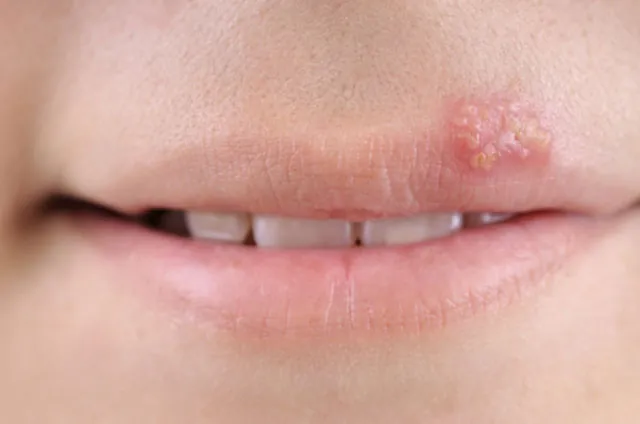
In people who have had a primary infection with the Herpes simplex virus, the virus can enter a dormant stage. After some non-specific stimuli (excessive sun exposure, heavy physical exertion, stress, psychological excitement or a decrease in the body’s defenses, for example with the flu), it can be reactivated and cause herpes. It appears on the lips or on the skin of the face in the form of a group of small blisters, preceded by burning and pain. When the blisters burst, scabs form that later fall off without a scar. Note: Do not touch the scab with your hands and let it fall off on its own.
Treatment: interferon ointment, aciclovir.
Canker sores
The cause is not fully understood. It is believed that stress and tension contribute to the appearance of solitary canker sores. Younger people are also affected. Redness and severe pain appear at the site of the canker sore. Ulceration with a whitish border follows. The entire area is very painful. The disease occurs at intervals.
Treatment: Anestin dragees before meals, Panthenol tablets for faster epithelialization, Dontisolon, C and B vitamins.
“Dry mouth”
Weak saliva flow can be a consequence of some diseases, menopause, but also insufficient fluid intake in the body. Some medications (antidepressants, antihistamines, diuretics) also temporarily cause dry mouth when taken. You can improve this condition by drinking small amounts of water more frequently. Dry mucous membranes are vulnerable and suitable for colonization by microorganisms. Dry mouth also results in a burning and stinging sensation.
Tip – eat food that requires longer chewing and contains proteins and vegetables. Sucking on pieces of ice and lemon often helps saliva secretion. Visit a doctor.
Bad breath
Even though you brush your teeth and interdental spaces, you still have bad breath! Look at your tongue! Is there plaque? Don’t forget to brush your tongue after brushing your teeth! The process of brushing your tongue may seem funny, but it effectively removes 75 percent of the sulfur compounds that cause bad breath.
Tip – various mouthwashes can eliminate bad breath in ten minutes or an hour at the most, and good hygiene definitely solves the problem.
