




Why do a systematic review?
The importance of systematic examination
A true renaissance in science in the last decade has given rise to verified research that has proven that caries and periodontitis are infectious diseases, and the pathogenic bacteria that cause them have been verified.
Precisely because of the identification of the causative agents of caries and the mode of transmission, it has been possible to determine accurate individual prevention of the disease, and today there is a generation of forty-year-olds without caries in Europe.
However, scientific research and world statistics show that 95% of adults still suffer from various types of gum inflammation, and by the age of 40 they are losing more teeth due to inflammation than to caries.
According to data from the World Dental Association, more than 80% of the population suffers from caries and gum inflammation.
- Scientific research in the last decade has proven that caries and periodontitis are infectious diseases.
- Determining the causative agent of caries and the method of transmission, good prevention of generations of 30-year-olds without caries and even 40-year-olds in Switzerland.
- However, scientific research proves that 95% of adults continue to suffer from various inflammations of the gums and already at the age of 40 they lose more teeth due to inflammation than to caries.
- Thanks to the renaissance in science, pathogenic bacteria that cause disease have finally been verified.
Until now, ORAL HEALTH has NEVER been part of the content of general health promotion, and the connection between general and oral health is insufficiently known to professionals and laymen alike!
Science has changed dentistry and the motto healthy teeth for life is no longer fiction, but reality!
And the statistics confirm it.
In Croatia, 30% of people aged 15-19 suffer from some type of periodontal disease, and by the age of 65, as many as 64% of people are toothless, and 90% of the rest have periodontitis.
According to the Croatian Institute of Health, in 2007, as many as 653,869 teeth were extracted – a number that is not even recognized in any neighboring country! In the same year, according to the same source, 2,165,998 tooth fillings were made!
The KEP-index (the sum of the number of carious, extracted and filled teeth) for children aged 11-14 is 6.7 in Croatia, while in Europe it is 0.5-1.5.
According to one of the few studies, children aged 11-14 brush their teeth:
- 10% brush 3 times a day,
- 44% occasionally,
- 40% rarely,
- 6% never!
Devastating statistics show that today more than ever it is necessary to emphasize the importance of hygiene in disease prevention. Because without regular oral hygiene, dental plaque appears – the number 1 enemy of our teeth.
It is important to remember: caries is an infection! The risk of its occurrence is individual, but it changes throughout life.
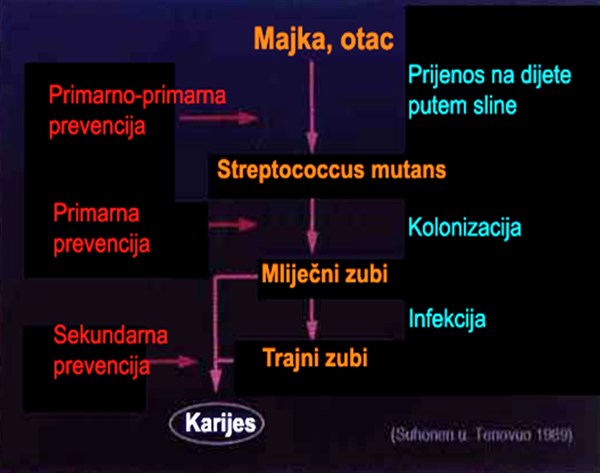
However, not all people react the same way to the accumulation of dental plaque! Each organism is different, depending on its defense capacity, in saliva, blood, habits, etc.
Bacterial attack and host response:

And our mouths are not sterile!
The soft and hard parts of our oral cavity are home to more than 500 bacteria that can lead to inflammation, which is a risk factor for much more serious diseases and consequences, as bacteria from dental plaque have access to the blood circulation (bacteremia):
- cardiovascular diseases
- atherosclerosis, stroke and heart attack
- premature birth and low birth weight of the newborn child
- polyarthritis
- weakened immune system
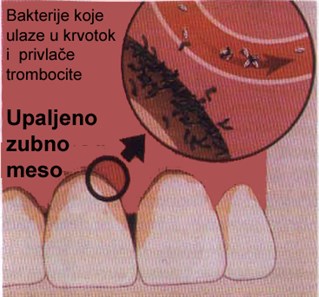

Periodontitis is also a risk factor for many systemic diseases. Thus, the risk of developing heart disease is increased by 168% in those with periodontal disease, and it also has an impact on sexually transmitted diseases.
About 50 million sexually transmitted viral infections leave a mark on the oral mucosa.
HPV is particularly associated with the development of tonsil cancer in people under 40 years of age who do not have other risk factors such as smoking and alcohol.
Women’s Oral Health
Oral health is subject to hormonal changes and varies depending on age, and there are also problems that are characteristic of women, such as various diets, menstrual symptoms, pregnancy, menopause and osteoporosis, problems with bulimia and anorexia, etc.
Gingival symptoms have been recorded during pregnancy, but also with the use of oral contraceptives.
After menopause, numerous oral phenomena occur: discomfort [pain, a feeling of inflammation in the mouth, altered taste (salty, peppery or sour), xerostomia (dry mouth)], changes in the oral mucosa, osteoporosis that also occurs in the jaw bones
Oral health in men
The best strategy in the fight against oral cancer is regular systematic examinations.
After the age of fifty, men, smokers, alcoholics, exposed to ionizing radiation and a harmful environment at work, are ten times more likely than women to develop oral cancer, which is the cause of death among the top ten cancers in the world.
The reason for this is late detection. Therefore, it is the duty of dental doctors to carefully examine the entire oral cavity, stain suspicious lesions with a specific blue dye, and perform screening with a specific blue dye.
Also, the risk of mouth and teeth injuries is greatly increased, especially in sports where impacts are directed at the mouth. A mouth guard is the best protection because when receiving an impact, the elasticity of the device absorbs and redirects the force of the impact, thus protecting both hard tissues (teeth and jaw) and soft tissues (lips, cheeks and gums).
 The role of a mouth guard is multiple:
- Protects teeth and oral tissues from direct injuries
- Mitigates blows to the head and face
- Reduces the severity of injuries to the neck
- Mitigates strong blows that could cause fainting and concussion
Oral Health and Medications
Drugs can greatly alter plaque pH, cause root surface caries in older patients, and may affect the metabolism of periodontal pathogens.
Particular attention should be paid if the patient is taking any of the following types of medications:
- Categories of medications associated with xerostomia
- Anorectics
- Antianxiety agents
- Anticholinergics/antispasmodics
- Anticonvulsants
- Antidepressants
- Antidiarrheals
- Antihistamines
- Antihypertensives
- Antiemetics
- Antiparkinson’s disease agents
- Antipsychotics
- Bronchodilators
- Decongestants
- Diuretics
- Muscle relaxants
- Narcotic analgesics
- Nonsteroidal anti-inflammatory drugs
- Sedatives
- Smoking cessation aids
As knowledge of the link between oral diseases and other systemic diseases continues to grow, prevention should become a primary goal of oral health.
The importance of systematic preventive examinations and general oral health for the health of the entire organism is an important prerequisite:
- No more caries
- No more bleeding gums
- No more bad breath
- Teeth do not wobble
- Beautiful healthy aesthetic appearance
- White teeth
- Your own teeth until old age
A new approach to prevention at the Dental Polyclinic Ksaver with a modern strategy:
- Determination of the risk of caries and periodontal disease
- Biological and individual factors
- Clinical tests
- Individual preventive instructions according to risk findings
If a modern strategy cannot be implemented, a conventional approach is used, observation of the clinical situation, repair of damage already caused, equal and general prophylaxis advice for everyone with didactic instructions.
The previous belief in extensive restorative work leads to the mistaken belief that a complete and expensive set of teeth is a sign of dental health!
